Tuesday, January 25, 2022

How Supply Chain Changes Will Affect YOU!


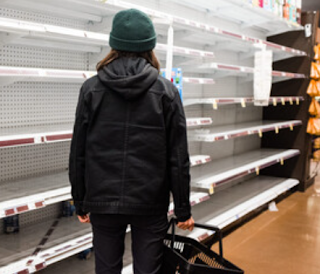
Do the shelves of your grocery stores look as if they’ve been looted?

Our grocery shelves are bare, stores don’t know when the trucks are coming with fresh stock, and according to one store employee, shelf stockers may find themselves laid-off because there’s just no stock to put on the shelves! 

At least 25% of reported Canadian truckers are vaccinated, and up to 40% of American truckers are as well. But many disagree with the mandate to get immunized or pull over. While there is a “Freedom Convoy” on the way to Ottawa to protest, many feel it's a waste of time. They believe the government will dig their heels in and force truckers to get the jab or be sidelined. Truckers are not allowed across the border without proof of immunization, and this mandate has slowed delivery of goods, food-stuff and all kinds of supplies. Shelves are bare, and when a delivery truck does pull in, word gets out and a rush is on to get supplies before it’s all gone. There is no more waiting until pay-day to get your food.

Get it now or go without.

The Canadian Trucking Alliance (CTA) says there are reports of truckers intending to leave the industry. The industry is expecting a loss of 12,000 to 16,000 cross-border commercial drivers due to this month’s mandate. That’s a lot of groceries held up by a lack of drivers.

The pandemic has affected 72% of businesses in one way or another. Over the past two years, organizations with smart leadership have been able to pivot, learn and adapt in order to stay alive. Many industry leaders took a hard look at their systems, invested in digital tools, new approaches and replaced legacy systems that were no longer were adaptable. This self-reflection and investment will (hopefully) allow them to move from a reactionary position to one of foresight and better responsiveness. 

One of those new approaches is called “supply chain as a service”, or SCaaS. In essence, a company would sign with a service partner to support all their supply chain needs such as item procurement, manufacturing, quality control, warehousing, and logistics enabled by cloud software. This approach is similar to tech giants who provide all the services their clients might need, preventing them from having to look elsewhere for splinter components of their needs. In the SCaaS model, current logistics companies could study the needs of their clients and grow in directions that would provide more services, thereby solidifying their potential for adaptability and future growth. This is good for the economy because it would ease much of the procurement, pricing and logistics nightmares stores battled with before the pandemic. Even smaller chains. It’s good for the end consumer too, because it eases (in theory) much of the supply issues.

The days of the “just in time” system are over. The companies and organizations that will survive these changing times are the ones that will adopt elastic responses. Basically, organizations who plan ahead and have different response plans to different scenarios. No more “just in time” inventory, but plans A, B and C that are adapted for different demands from consumers. This will minimize risk, improve customer service and ultimately build a more loyal customer base. From the customer’s perspective, an elastic response should lessen shortages and respond more quickly to changing demands.

But all of this will not come into play next week. It may take the duration of 2022 for any of these scenarios to be enacted. In the meantime, it is up to the individual consumer, you and I, to find the best way forward for ourselves. For our families. It is up to us to do as the supply chain industry has done - study what we currently consume, examine how we can provide it for ourselves and adopt more elastic systems moving forward. Take on increased responsibility for personal resilience by doing more for ourselves, while consuming less of what we don’t really need. Leaning more heavily on the limping supply chain won’t get us any further ahead. Being more responsible for ourselves, thinking creatively, adapting to the empty shelves and growing what food we can is good for our mental health and morale. It worked for our grandparents and it will work for us.

If you enjoyed what you’ve just read, think how smart you’ll look when you tell your friends about it. So share this with everyone you know! Thanks so much for sharing your time with me today. 


Sunday, January 23, 2022

Plunged Into Darkness


There you are, scrolling through Netflix, unable to decide what to watch when suddenly, your world goes black! No light from the television or computer, nothing. With the light from your cell phone guiding you, you make your way over to the window and look outside. All the buildings around you are dark too. Oh crap, this can’t be good.

Power failure. Okay, the electricity will come back on in a minute, right?

A minute later, you lift your phone to scroll through Facebook, only to realize the battery has less than fifty percent battery left.

You reach for the charging cord and stop…no power. Crap.

A short walk will help kill the time, yeah! But you’re on the tenth floor of your building. Crap, no elevator either. You don’t want to walk down the stairs lit only by emergency lighting, just to have to walk back up later. So you decide to go to bed early, maybe the power will be back on when you wake up.

But when you wake up, shivering a few hours later, there’s still no power and no heat. The wind is coming out of the north, blowing against your balcony door and your apartment is getting cold.

What do you do?

So many people have dismissed this scenario without considering it. Many people found themselves wishing they hadn’t. 


Breakfast on a barbeque?

Take the big power failure of 2003. Not everyone was prepared for 12 hours without electricity. Some were at a loss for how they would feed their family. Restaurants were without power too, so there was no help there. I was lucky. We lived on the ground floor of our apartment building and had a barbeque. Bacon had already thawed, so we had breakfast for lunch, and many of our closest neighbours popped by to see how we were cooking. The smell of bacon drew them in more than their curiosity, I’m sure. They were all surprised to see my cast iron fry pans. A few even asked if I’d cook for them after I was done, if they supplied the food!

We weren’t really inconvenienced at all because we had a “Plan B”. If the power were to go out, we’d simply cook on the barbeque. We already had the cast iron pans, because I love cooking on them, but they stood up to the flames better than any Teflon coated pan could have.

Things really got fun when an irritated neighbour with no sense of humour called the fire department on me, claiming my barbeque was up against the building. It wasn’t. I knew the regs. When the fire department showed up, they verified that the grill was more than far enough away from the building and expressed a little envy over the burgers that I was, by then, grilling.

Except for that one neighbour, I was the hit of the building. Our side, at least.

But I was lucky to live on the ground floor, and prepared. Not everyone was.

Do you know how you would cook in a power failure that lasted more than four hours? Do you have a backup plan? If you live in an apartment building, do you know what the rules are in your building for barbeques or camp stoves? If you have a house, even a rental, what would be your backup plan? If you have a family, you can’t just throw your hands in the air. They’re relying on YOU to know what to do. 

Time for Plan B

A 4-hour power failure is a good wake-up call. Consider plan B for cooking, communication, water and flushing the toilet. Brainstorm on paper. Get your family involved in your brainstorming. Discuss alternatives to your everyday lives. What will you do if there is a large scale power failure that results in your family getting sent home from work or school? (Assuming we ever get to go back to life as we knew it, but that’s another post for another time) Do you have a back-up, charged battery for your cell phone, or some other way to reach out for help if the need arose? Do you have a solar power bank you can draw on, or perhaps a generator?

Even apartment dwellers can usually find space to store water. While I try and discourage single-use plastic water bottles, a case of 12 or 24 stashed under a bed is better than no saved water at all. If your circumstances are such that you have 4 in your family, and you have room to store a case of bottled water under each bed - do it. It’s better to have it when you need it, than to take the moral high ground and make your children go thirsty needlessly. 

What’s under your bed?

When you have the water taken care of, assume 4 gallons (for drinking) per person and pet per day, then turn your attention to food. Make a list of what your family likes, figure 3 days of food and take steps to set that aside. Under beds are frequently overlooked as storage spaces, as is the bottom of closets. Storage tubs that fit under beds can be purchased at Walmart, Lowes, Home Depot, Canadian Tire or any local hardware store that you prefer. You can store 3 days of shelf-stable food in one of those, put it on top of the case of water that you’ve already stashed away, and you’re two steps closer to providing for your family in case of an emergency. Oh, and if your emergency food stash includes canned goods, don’t forget a can opener!

I live out in the woods now, and the weather is a concern most especially in the winter. We don’t get as much snow as we used to when we moved here, but we do get more erratic storms. Today, for instance 8” of snow was predicted. I spent almost my entire day shovelling the driveway (twice!) and I can tell you we got much closer to a foot of snowfall. Combine that with wicked wind gusts and there was a lot of potential for a power failure. Not surprising with all the trees that grow close to the power lines.

Transformers - not the fun kind

Last year, our local power company sent out crews to take down any and all trees growing within a certain distance of power lines. Makes sense, even if I do hate the mess they left behind. However, no one foresaw a local transformer blowing up one evening. Some of us were without power for far, far longer than we liked, because the power company had to order a new transformer up from Southern Ontario. The kicker of all this is that power companies don’t keep spares around. Why? Cost and availability.

Transformers, depending on the type, could cost anywhere from $7,300.00 to $325,000.00 for the high voltage ones. There are a mere 11 companies in the United States that make different types of transformers for a variety of applications, but not all high voltage. In low-demand conditions, an order for a high-voltage transformer takes 12-24 months from order to delivery for a domestically manufactured unit. But the number of companies that produce high-voltage units are declining. Their profit margins are ruled by more in-demand products, parts and services. High-voltage, powerful transformers are expensive, so smaller power companies, like ours, can’t afford to have one or two sitting around “just in case”.

So all of this is to warn you that the power might not come back on “shortly”. It might be days. It’s up to you to be forward-thinking, creative and plan ahead for you and your family. Brainstorming and planning now could save you a world of hurt in the future.


Tuesday, October 12, 2021

How A Hobby Can Feed Us


Life as we know it has changed.

Now, I don’t mean to sound alarmist and pessimistic with that statement, but it’s true.

Our ‘normal’ has changed. Only time will tell if it reverts back to what it was before.

But whining about it does no one any good. What we have to do is remain calm and adapt.

How do we adapt if we have no idea how long this new global emergency will take to play out?

Look to the past.

Many people’s ‘normal’ was upended during WW2. They had to learn how to bake with less flour as factories were mandated to make less of their ‘normal’ product and help make MRE’s for the soldiers. People had to learn to mend, patch, darn and make clothing from sources they might not have previously thought of otherwise. Like floursack cloth. 

Much of our food is not made in our own countries. Here in Canada, quite a lot of it is imported, including fruit and vegetables. Our food supply chains are going to be impacted as borders are closed to all but freight, as panic shopping reveals empty meat, bread, pasta and produce sections. This has already happened. How do we adapt?

Learn to make, and enjoy more meatless meals. Learn to make our own bread, buns, rolls and the like. Those who already know how to make their own pasta are one step ahead of the rest of us. Grow our own lettuce and potatoes. But consider this for a moment…

If people are self-isolating by the thousands now, who will start the seeds and man the greenhouses? Who will care for the seedlings until they are big enough to ship out to landscape centers and grocery stores in the spring, where gardeners have been known to cart home flats and flats of the little seedlings?

I’ll give you a minute to ponder that…

Yes, even a gardener’s hobby has been touched by Covid-19. There have been fewer seedlings to run our palms over, to study the growing tips and roots, to spend time choosing the very best there is. So how do we adapt to this?

We grow our own.


We sit down and honestly look at why we garden. Perhaps the hobbyist who has always grown roses should consider planting things that can be used in a salad, thereby improving their diet, their immune system and their overall health. This simple change will also result in fewer things needed at the now-overtaxed grocery store.

Now is the time to honestly assess if our occasional treat of sweet corn is worth the big plot of garden that would be better used for a staple like potatoes. Perhaps you’re sick and tired of mowing the lawn and would love more tomatoes in your diet. Learn what you need to do to convert the lawn to a food garden. (Even if your neighbours object now, they won’t when you share some of your bounty of sweet, juicy tomatoes with them at harvest)

So, my advice for you today...your “homework” if you will, is to sit and honestly assess what you want out of a garden. How can you modify your current situation and adapt to an ever-changing food landscape? Feel free to share your thoughts or concerns in the comment section. We’re all in this together and I don’t think we’re going to see the other side of it for a few years yet.

Monday, October 11, 2021

Your Worms Want Coffee


I hope I’m not the only one who finds compost fascinating. After all, any process that can take organic waste and break it down into nutrients is an awe-inspiring thing! Tonight I found out that even my morning coffee is nutritious twice!

From The Rodale Book of Composting;
The nutrient content of coffee residues varies according to the type of residue. Grounds have up to 2% nitrogen, 0.33 % phosphoric acid and varying amounts of potassium. Drip coffee grounds contain more nutrients than boiled grounds, though the potassium content is still below 1%. Other substances found include sugars, carbohydrates, some vitamins, trace elements and caffeine.
Coffee processing plants sell coffee chaff, a dark material containing over 2% nitrogen and potassium. Chaff is useful either as a mulch or as a compost. Apply your coffee grounds immediately, or mix them with other organic matter. They hold moisture extremely well. Left standing, they will quickly sour, inviting acetobacters (vinegar-producing microbes) and fruit flies.

How cool is that! My coffee not only gives me a jolt of ambition but is healthy and helpful for my compost and plants too!

Used as fertilizer, the grounds add organic matter to your soil. This helps aerate the soil, feeds any worms and other tiny critters present (and attracts them if you don’t have them already), helps repel ants, improves drainage and increases water retention. I can tell you that adding used, cool coffee grounds definitely attracts worms. I’ve been adding grounds to our garden beds, formerly a mostly sandy mix of who-knows-what, and every year, I’m amazed to see worms happily twisting through the soil.

You want earthworms — their casings are full of micronutrients your plants need to thrive and resist stress. A plant that can resist stress is better equipped to repel harmful insects and short periods of drought.

There are dozens of other ways to make your morning cup help out in the garden, but that’s another post for another time. Do you garden? Let me know in the comments section!

Saturday, March 21, 2020

A Gardeners New Normal~Seedlings and Covid-19


Life as we know it has changed.
Now, I don’t mean to sound alarmist and pessimistic with that statement, but it’s true.
Our ‘normal’ has changed. Only time will tell if it reverts back to what there was before.
But whining about it does no one any good. What we have to do is remain calm and adapt.

How do we adapt if we have no idea how long this new global emergency will take to play out?

Look to the past.

Many people’s ‘normal’ was upended during WW2. They had to learn how to bake with less flour as factories were mandated to make less of their ‘normal’ product and help make MRE’s for the soldiers. People had to learn to mend, patch, darn and make clothing from sources they might not have previously thought of otherwise. Like flour sackcloth. Now, I don’t think the supply of clothing is going to be a big concern, but someone brought another issue to my attention yesterday.


Much of our food is not made in our own countries. Here in Canada, quite a lot of it is imported, including fruit and vegetables. Our food supply chains are going to be impacted as borders close to all but freight, as panic shopping reveals empty meat, bread, pasta and produce sections. This has already happened. How do we adapt?

Learn to make, and enjoy more meatless meals. Learn to make our own bread, buns, rolls and the like. Those who already know how to make their own pasta are one step ahead of the rest of us. Grow our own lettuce and potatoes. But consider this for a moment…

If people are self-isolating by the thousands now, who will start the seeds and man the greenhouses? Who will care for the seedlings until they are big enough to ship out to landscape centers and grocery stores in the spring, where gardeners have been known to cart home flats and flats of the little seedlings?

As the count of confirmed Coronavirus cases rise, as more and more people fall ill (and hopefully eventually recover), as more people self-isolate and work from home or do not go to work at all...how many seedlings do you think will be a priority as spring approaches?

I’ll give you a minute to ponder that…

Yes, even a gardener’s hobby will be touched by Covid-19. There will be fewer seedlings to run our palms over, to study the growing tips and roots, to spend time choosing the very best there is. So how do we adapt to this?

We grow our own.


We sit down and honestly look at why we garden. Perhaps the hobbyist who has always grown roses should consider planting things that can be used in a salad, thereby improving their diet, their immune system and their overall health. This simple change will also result in fewer things needed at the now-overtaxed grocery store.

Now is the time to honestly assess if our occasional treat of sweet corn is worth the big plot of garden that would be better used for a staple like potatoes. Perhaps you’re sick and tired of mowing the lawn and would love more tomatoes in your diet. Learn what you need to do to convert the lawn to a food garden. (Even if your neighbours object now, they won’t when you share some of your bounty of sweet, juicy tomatoes with them at harvest)

So, my advice for you today...your “homework” if you will, is to sit and honestly asses what you want out of a garden. How can you modify your current situation and adapt to an ever-changing food landscape? Feel free to share your thoughts or concerns in the comment section. We’re all in this together!

Thursday, March 19, 2020

Why Do I Need To Prepare?


(I thought I'd update and re-post a popular installment today that maybe some folks haven't seen. I'd love to know what you think, leave your thoughts in the comments!)

"Do your best to change the world, Do your best to be ready for changes in the world"
~Chinese proverb~


When was the last time you had a power outage that lasted for more than three hours? Has your neighbourhood ever flooded or come through a landslide? Have you ever been laid off and unsure where grocery money was going to come from? Has wildfire ever threatened your home? Have you ever been suddenly thrust into an unsafe situation?

The world as we know it is different for everyone. The many ways our world can, and is, changing is staggering. Just listen to the news for ten minutes for proof of how much our world has changed in the past two years! A radical change to our world as we know it can be anything to suddenly being without power for days (which happens to more people than you may realize), to a massive flood (been there, done that), to an unforeseen job loss, nearby chemical spill (which yours truly has lived through) ... you get the idea. Even in a minor power outage, we cannot pump gas, pay for anything electronically, and eating out if there's no power at home is likely not an option either. You will not be able to cool your home by either A/C or fan in a power outage, you won't want to be looking in the fridge every 15 min, and what about flushing the toilet? Let's not forget food shortages brought on by a massive snowstorm or being cut off without transportation after a flood or snowstorm (been there, done that too). So, the number of ways our world can change radically is staggering. But we don't have to wring our hands and moan, we can do something. Quite a lot in fact.

I am well known for having backup plans on top of backup plans. Once, it was only for childcare, but as the kids grew, having a Plan B, and Plan C, and so on, spread throughout my life. In these challenging times, we can plan for many life surprises, and not only end up in control of our lives but also change our mindset. Think about it, if you can plan for a sudden layoff, your attitude changes. Let's say one day, you and 150 of your co-workers are informed your factory is closing next month. This has happened to so many people, I can't count that high. So, how do you plan for this BEFORE it actually happens to you? Times are hard financially and you're only living two paychecks ahead of panic, so investing $200 in stocks isn't going to happen anytime soon. But let's set aside the investing, money security for a minute. Let's think about something more basic. Food.

If you're laid off and you have some food put by, your attitude towards this crisis will be different than the outlook of someone who has not planned for just such an occasion. It will still be a huge upset, but you won't have to wonder how you'll feed the spouse, two kids, and the family dog. I've been there, and I can tell you that visiting a pawn shop to trade in jewelry so I can feed the kids isn't fun. So, when you go grocery shopping, make a list. If your grocery list calls for three cans of kernel corn, buy four cans. If you were going to get two pounds of ground beef, and you can afford it, get three. I know you might not be able to do this all the time, very few people can. Every time you go shopping, look realistically at your list. One week get a couple extra cans of vegetables, the next shopping trip, get a bit of extra meat. The next shopping trip, consider getting a home first-aid kit or improving on one you may already have.

The next thing you need to do is keep track of these extras. I used to work in retail, and we had a system of rotation that is summarized by FIFO. "First In, First Out". If it's easier for your family, get a permanent black magic marker and write on the can or box the date you bought it. Meat can be wrapped and sealed in a freezer bag. Be sure and write the date purchased on the bag before the meat goes in. If someone in your house bakes, consider buying an extra bag of flour. (TIP: if you can, freeze it for a few days before putting it in a storage container. That way you won't be unpleasantly surprised by small, black, wriggling things. We found this out the hard way)

Using this method of buying a few extras as we could, we've been able to set aside large tubs of coffee, drink crystals, peanut butter, meats of all kinds, yeast for baked goods, pasta, a variety of sauces, and the list goes on. I remember when I had to visit the pawnshop before the grocery store. I remember all too well that feeling of fear, depression and hopelessness. I also remember living in Northern Ontario and being snowed in with my spouse-at-the-time being gone already for a few days. I didn't drive, but I had a toddler to feed. Again, having food stores made all the difference in my attitude and outlook.

TL:DR:
The wisdom of food storage cannot be overstated. Everyone, regardless of income level, tax bracket, location or age should consider doing what they can to put some food by. The more, the better. Give careful thought to storage, record keeping and how all that can be achieved cheaply.

What challenges do you think your area might face that you can plan for? Let me know in the comments below!

Tuesday, September 25, 2018

Who Is Eliot Coleman, And Why Should You Know Who He Is?

Who is Eliot Coleman, and why should you know who he is?


He is an American farmer, author, agricultural researcher and educator, and proponent of organic farming. Back around 1969, he taught himself how to farm organically in the sometimes harsh Maine climate and developed the cold climate farming techniques that he's known for. In 1989 he wrote his first book, The New Organic Gardener. It would be one of many that would change the minds and methods of gardeners everywhere, including myself.

Eliot advocates for feeding the soil, thereby manipulating weed growth, disease, plant health and our eventual health as a result. You might say he was organic cool before it was cool. Eliot taught me what sustainable agriculture was, and the hook was set. I've been an enthusiastic student of his ever since, even when I couldn't garden in the traditional sense. In his quest to understand the land better, he has often turned to published works on agriculture in an effort to continually improve his farming methods. A method of learning I've adopted from time to time. Over time, Eliot has become a mover and shaker in the organic world, as well as the market farming community. He is a mighty voice and a well-respected advocate for healthy soil.

So what difference does this make to you, a humble blog-reader?

No matter if you have a backyard garden or a collection of pots where you grow some salad greens on your balcony, Eliot Coleman's wisdom can teach us all about how simple soil can make us healthier people. Over the next few weeks, I'll be studying as much of his written works as possible, discussing them here and trying to understand how I can utilize his wisdom here on our less-than-an-acre property.

Along the way, I'll be writing to Eliot here on this blog, as if he and I were on such terms where correspondence back and forth might be possible. (Yes, I know it isn't) Much like the foundation for 'Letters To A Young Poet' in which ten letters were written to a young man about to enter the German military. His name was Franz Kappus, he was 19 years old, and he wrote to R. M Rilke looking for guidance and a critique of some of his poems.


Or more for my purposes here, 'Letters To A Young Farmer'. This book was written by some of the most influential farmers, writers and leaders of our time. They share their wisdom and insight in an anthology of 36 essays and letters. Barbara Kingsolver speaks to the tribe of farmers—some born to it, many self-selected—with love, admiration, and regret. Bill McKibben connects the early human quest for beer to the modern challenge of farming in a rapidly changing climate. Michael Pollan bridges the chasm between agriculture and nature. Dan Barber, Temple Grandin, Wendell Berry, Rick Bayless, Marion Nestle and more offer advice and inspiration. And in the spirit of this endeavour, I'll be writing the next series of blog posts to not just Eliot but to all these other learned and wise proponents of the land and farming.


So as we settle in for an interesting conversation with Eliot, Barbara, Michael, Marion, Wendell and the rest, tell me...do you garden?

Sunday, September 23, 2018

It's Time To Look At Agriculture Differently


Sometimes certain posts, with bits of wisdom that need to be recovered, bears repeating. Here's one that I've had a lot of comments on...


My partner and I were talking about our future one day when she made a statement that still has me thinking weeks later. I was telling her about my plans for the not-quite-an-acre property, and how I plan to eke as much food from it as possible. She nodded and said, "Your job will be growing the food and mine will be preserving and cooking it" Now, obviously there will be more to it, but she has the essence of it right. With the core of our new roles put like that, I realized I can't take a break from learning all I can about agriculture.

John Michael Greer talks about two agricultures in his blog entry, Two Agricultures, Not One 
He talks about how the mega-farming as we know it today is an industrialized and chemicalized version of the intensive farming that fed our ancestors, and he also shares the opinion that intensive gardening is going to help us pad our food shortfall, 

"A team of researchers at pioneering organic-gardening group Ecology Action found, on the basis of extensive tests, that it’s possible to feed one person year round on a spare but adequate vegetarian diet off less than 1000 square feet of intensively gardened soil... In the more troubled parts of the future ahead of us, some of us may have to do just that; a great many more of us will need to be able to garden in order to pad out potential irregularities in a food supply that’s desperately vulnerable, over the short term, to fluctuations in the price and availability of fertilizer feedstocks and fossil fuels. The victory gardens of past wars are likely to be a useful template for the survival gardens of the deindustrial future."
 
I completely agree, and I've begun to see it already. All of that only frustrates me on another level, because here, I can hardly grow anything, facing north and being in shade. So on one hand, I could sit and whine about it, or I could shut up and do something. Months ago, I chose the latter. So it has become my secondary job, if you will, to learn everything I can about growing as much as I can on very small acreage. Starting with the soil. I already knew that compost is better than any chemical fertilizer we can manufacture. It's better all around, for the plants and for the environment, and it goes hand-in-glove with the various micro-environments in one's garden. I've been learning exactly how earthworms break down plant matter, how plants use the nitrogen from the air and how the no-till method is better than churning up our soil every spring and fall. I've also learned quite a bit about why seaweed is a better fertilizer than one that relies on ever-diminishing oil supplies. Did you know that plants require not only the big three (nitrogen, phosphorus and calcium), but also micro-nutrients? Without those micro-nutrients, the plant cannot grow to its true potential, and the resulting food lacks nutrients also. Hence the mystery of the tomato with less Vitamin C.

So, the answer then I think, is to go back to farming, or at least gardening, the way we used to. Those that can need to turn away from chemical fertilizers, away from row gardening, away from the way 90% of all gardening books tell us it should be done. We need to learn all we can about organic gardening, intensive gardening, square-foot gardening, composting, vermiculture, soil tilth, extending the growing season no matter where we live, and the value of the old-style farmsteads. The inter-relations of soil, air, food, animals, trash and what our culture has done to our planet cannot be overstated. But in the end, we will all come to a point where we must put down the books, turn away from the computers and do something about it. More of us need to focus on food production in a way that will not poison ourselves and our environment. We need to get back to basics, we need to take that first step.

Once we take control back over our food, we can begin to take more control over our lives and hand less of ourselves to the government. Once we get back to basics, many of us will need less and be happier with less and realize the folly of our culture's demand for the latest, best and fastest gizmo of the week. (I write this while admitting I spend more time on my computer than I probably should) I also admit that getting back to basics will inevitably improve our health, give us clearer vision when we look at what's going on around us, and in many cases, shift our priorities.
This is only the tip of the iceberg, it's true. We all need to start thinking about what's coming and how we might each be responsible for changing our corner of the world.

What do you think?

Wednesday, June 06, 2018

The Future Will Belong To Those Who Prepare For It


(I thought I'd re-post a popular installment today that maybe some folks haven't seen. I'd love to know what you think, leave your thoughts in the comments!)

"Do your best to change the world, Do your best to be ready for changes in the world"
~Chinese proverb~

When was the last time you had a power outage that lasted for more than three hours? Has your neighborhood ever flooded or come through a landslide? Have you ever been laid off and unsure where grocery money was going to come from? Has wildfire ever threatened your home? Have you ever been suddenly thrust into an unsafe situation?

The world as we know it is different for everyone. The many ways our world can, and is, changing is staggering. So a radical change to our world as we know it can be anything to suddenly being without power for days (which happens to more people than you may realize), to a massive flood (been there, done that), to an unforeseen job loss, nearby chemical spill (which yours truly has lived through) ... you get the idea. Even in a minor power outage, we cannot pump gas, pay for anything electronically, and eating out if there's no power at home is likely not an option either. You will not be able to cool your home by either A/C or fan in a power outage, you won't want to be looking in the fridge every 15 min, and what about flushing the toilet? Let's not forget food shortages brought on by a massive snowstorm or being cut off without transportation after a flood or snowstorm (been there, done that too). So, the number of ways our world can change radically is staggering. But we don't have to wring our hands and moan, we can do something, lots in fact.

I am well known for having backup plans on top of backup plans. Once, it was only for childcare, but as the kids grew, having a Plan B, and Plan C, and so on, spread throughout my life. In these challenging times, we can plan for many life surprises, and not only end up in control of our lives but also change our mindset. Think about it, if you can plan for a sudden layoff, your attitude changes. Let's say one day, you and 150 of your co-workers are informed your factory is closing next month. This has happened to so many people, I can't count that high. So, how do you plan for this BEFORE it actually happens to you? Times are hard financially and you're only living two paychecks ahead of panic, so investing $200 in stocks isn't going to happen anytime soon. But let's set aside the investing, money security for a minute. Let's think about something more basic. Food.

If you're laid off and you have some food put by, your attitude towards this crisis will be different than the outlook of someone who has not planned for just such an occasion. It will still be a huge upset, but you won't have to wonder how you'll feed the spouse, two kids, and the family dog. I've been there, and I can tell you that visiting a pawn shop to trade in jewelry so I can feed the kids isn't fun. So, when you go grocery shopping, make a list. If your grocery list calls for three cans of kernel corn, buy four cans. If you were going to get two pounds of ground beef, and you can afford it, get three. I know you might not be able to do this all the time, very few people can. Every time you go shopping, look realistically at your list. One week get a couple extra cans of vegetables, the next shopping trip, get a bit of extra meat. The next shopping trip, consider getting a home first-aid kit or improving on one you may already have.

The next thing you need to do is keep track of these extras. I work in retail, and we have a system of rotation that is summarized by FIFO. "First In, First Out". If it's easier for your family, get a permanent black magic marker and write on the can or box the date you bought it. Meat can be wrapped and sealed in a freezer bag. Be sure and write the date purchased on the bag before the meat goes in. If someone in your house bakes, consider buying an extra bag of flour. (TIP: if you can, freeze it for a few days before putting it in a storage container. That way you won't be unpleasantly surprised by small, black, wriggling things. We found this out the hard way)

Using this method of buying a few extras as we could, we've been able to set aside large tubs of coffee, drink crystals, peanut butter, meats of all kinds, yeast for baked goods, pasta, a variety of sauces, and the list goes on. Now, I'm employed, but it's been less than a decade since I had to visit the pawn shop before the grocery store. I remember all too well that feeling of fear, depression and hopelessness. I also remember living in Northern Ontario and being snowed in with my spouse-at-the-time being gone already for a few days. I didn't drive, but I had a toddler to feed. Again, having food stores made all the difference in my attitude and outlook.

The wisdom of food storage cannot be overstated. Everyone, regardless of income level, tax bracket, location or age should consider doing what they can to put some food by. The more, the better. Give careful thought to storage, record keeping and how all that can be achieved cheaply. 

Monday, May 28, 2018

A Canadian Culinary Conundrum


While reading an essay this morning on food in the South, it occurred to me that I haven't spent much time exploring food here in the North. Do we even have what can be described as 'Northern Food'? With Southern food, it's easy. Grits, collard greens, okra, Creole, and the list goes on. For the record, the only item on that short list that I've not tried is collard greens, and I hope to rectify that as soon as the baby collards on my front porch are big enough. My Southern partner has educated me well in the ways of shrimp creole, handmade biscuits so soft you think they're a religious experience and proper sweet tea.

But back to Northern food...do we have any food that we can point to and say is a good representative of our Northern experience? If you ask my sons, they will tell you that bacon is the quintessential Northern food. If you ask any "good" Ontarian, they'll likely tell you that the most Canadian food is the humble butter tart. (It was invented here in Ontario, you know) Some folks will tell you that Beaver meat is a Northern food, others will point to poutine. You know what poutine is, don't you? A plate of french fries (cut from russet potatoes if you're looking for quality fries), smothered in beef gravy, salted and peppered and covered in cheese curds. Not grated cheese. Cheese curds.


Certainly maple syrup is a proper Canadian food. We produce some of the best here in Ontario, and I'm not talking about the weak-tea coloured stuff you buy in a plastic bottle! No, I'm talking about the dark, sweet liquid that can only be produced after someone has trekked through the bush for hours collecting sap buckets under dripping taps hammered into trees, and then spent many more hours boiling the stuff down over a smokey fire, slapping away the earliest bugs. There's a reason entire tractor trailers loaded with Grade A maple syrup have been stolen away. Good maple syrup has a certain quality...it's the taste of all that time and smoke and dedication.

Other folks will argue that Canadian cuisine is a collection of foods that were brought to our great land from its first immigrants. The Dutch, the Mennonite, the Ukrainians, the displaced Creole, the French, the Japanese, the Germans, and let's not forget the Jewish influences on Montreal Smoked meat!

You know, it occurs to me now, that I eat just as 'Northern' as I do 'Southern'. Perogies, Rueben Sandwiches, heaping plates of Poutine, I've had venison a number of times and enjoy it greatly, and I've even tried bear meat sausages. I can appreciate a fine bottle of Northern Ontario maple syrup, and I've frequently made enough Perogies to feed a branch of our Canadian Armed Forces.

I guess I'm safe in my culinary Canadian-ness after all.

What food does your home region point to proudly?

Wednesday, April 11, 2018

McBride on Medium!


I'm pleased as punch to let you all know that I'm writing on Medium now! I'll be writing more often about preparedness, increasing self-sufficiency, gardening and relying less on the grocery stores.
I plan on branching out into some less discussed topics as well.

I invite you all to come and visit me there. I look forward to engaging and productive discussions on how we can all increase our self-sufficiency.

(P.S: I'll still be updating here as well, I just wanted to let everyone know where else I can be found online)

McBride On Self-Sufficiency at Medium


Sunday, March 18, 2018

What Next After People, Part 2


Previously, we engaged in a little thought experiment (Brought on by sleeplessness via the dog laying on my arm. Thank you, Harley)

In my ‘what-if’ scenario, I lived in a world with a much-reduced population. One where there weren’t enough people left to keep the power and internet on, and priorities were food, water and shelter. Once all the food in my nearby city was gone, there was nothing to hold me there and I had left the concrete for the bears, rats and coyotes. In my thought experiment, I retreated to the woods north of the city and began to build a refuge there.

I imagine that while I walked, I would desperately try and remember the Survival Rule of threes.
  • You can survive for 3 minutes without air
  • You can survive for 3 hours in a harsh environment without shelter
  • You can survive for 3 days without water
  • You can survive for 3 weeks without food
(All of these assume you’re not in icy water)

So let’s assume I have a backpack containing a wool sweater I found somewhere, a 2 layer weatherproof jacket scrounged from the back of a truck (the dead man at the wheel wasn’t going to be needing it anymore) and enough food for a week. In the pocket of the coat, I found a lighter, a bottle of water, a bandana, a battery operated flashlight, a 6” folding knife, and the dead man’s keys. On that keychain is a small strike-a-light thing that create sparks when you scrape it. From a survival standpoint, this is a potentially life-saving discovery!

Ever vigilant for wild animals, I suspect it would take me a couple of days to reach my destination. I’m in fairly decent shape for a walk of that length, but I don’t consider myself fit. I’m conscious of where I put my feet, because a sprained ankle would seriously limit my safety. I stay warm at night in the sweater and weatherproof jacket, and I’ve been lucky enough to find safe places to sleep at night, albeit fitfully. Let’s assume I made it out of town without incident.

I come across a small village seemingly uninhabited. I stay in the bush waiting and watching for as long as I can. Yes, it might be nice to have someone to talk to, but I can’t assume only the good people survived. So I’m cautious. I finally decide to approach one of the houses that looks in good condition. I can see a few crab apple trees in the yard and what looks like an overgrown garden nearby the house. I see no signs that anyone has been there in some time, so after a whole lot of internal debate with myself, I finally decide to check the house out.

Close inspection shows all the windows and doors intact and not a single human print in the dirt driveway. I look in all the windows I can reach, half expecting to hear a shout of alarm or warning. There’s no one inside and I find the backdoor unlocked. With a whispered apology to whoever owns the house, I quietly slip inside and explore. There are two levels, a basement with a walk-in pantry, a cold-room and various appliances. Knowing how long the power has been off, there’s no point in looking inside the freezer. Its contents would have thawed and rotted long ago. But the cold room is situated in such a way that it is kept cool by the earth itself, and the heavy door that protects it. My flashlight shows built in shelving stocked with all sorts of cans and jars of food, and I breathe a sigh of relief. On the floor are crocks and bottles. The crocks are full of sand that holds potatoes, carrots and apples. The bottles are all labelled ALE. It looks as if the previous occupants knew a thing or two about preserving and home brewing. The walk-in pantry holds a variety of buckets. They’re all labelled according to their contents, and if the labels are all correct, the house is well stocked with rice, flour, dried beans, bottles of spices and dried fruit. Leaving the basement, I return my attention upstairs.

There is a kitchen, whose cupboards are well-stocked with dry goods in large glass jars. Dishes still rest nestled inside each other in another cupboard. Down a long hallway I find a bathroom and two bedrooms, all empty of people. There are no bodies of the dead, no signs of panic or violence. It looks like the people who lived here just vanished. Curious, I explore further. Back in the kitchen, I take a close look at the table and find my answer. A notice of mandatory evacuation.

****

Next time: What would I find out in the barn that might help me stay alive?

I’d love to hear your impressions of my little thought experiment. Let me know in the comment section!

Friday, March 09, 2018

What Next After People?


I have just finished reading a novel that focuses on surviving in a future ripped apart by war. It's never made explicitly clear how long after the war, but I got the idea that it was a couple of generations at least. It was an entertaining book, and there were a couple of parts that nearly made me put the book down. I was impressed with the level of editing the book had received, only finding one mistake in a novel these days is pretty remarkable. My copy of Harry Potter has more than one typo! Anyway, I stuck with the book until the end and only have one niggling little quibble with it. 
The setting is New York City, specifically a greatly expanded Central Park. Now, even 25 years after a population-altering event, the underground pumps would have stopped working, and New York would be very, very wet. New York is actually already very wet. A team of men and 753 pumps struggle every day to keep the underground river from rising, and their efforts become even more focused and determined when it rains hard. Even as little as 2".

According to Alan Weisman, a man long considered an expert in what might happen to our world without us, 650 gallons of water rush not too far below ground in Brooklyn.  One supervisor of Hydraulics Emergency Response has been quoted as saying that without electricity those pumps would shut off and stay off. In a half hour, the subway tunnels would become so flooded, trains could no longer run. Within 20 years, Lexington Avenue would be a river.
Trees change faces too. The Chinese ailanthus tree would take over, as would weeds and native greenery. Seeds of weeds would blow in from various parks and take root. With no one to maintain the weeds and grasses, New York would not remain a sterile, concrete world. There would be more than just herds of zebra, bears and wolves for any remaining humans to deal with.

So while I recognize that the novel I finished yesterday is only fiction, and meant to be entertaining, I do wonder if the setting might have been better researched.

Regardless, all of this got me thinking while I couldn't sleep at 2 A.M.

Let's say for the sake of conversation that something horrible happened and mankind was not completely wiped out, but our numbers were dramatically reduced. Life has become day-to-day survival. Due to that same reduced population, there is no more power grid, no one to keep the internet running, not enough people to man the oil refineries, or make steel, or cigarettes or music, or any of the other dozens of things we've become accustomed to living with. Because I live in Northern Ontario, I, of course, turned my pre-dawn thoughts to how such a scenario would play out up here.

The closest city to me, an hour away by vehicle, would be taken over by the woods that surround it. The city was originally carved from the bush (as we Canadians call it), and a substantial wood-lot still resides at its heart today for educational purposes. (It is owned by a local college) It isn't unusual to see bears in town, or fox, cougars have been known to come calling, coyotes and even a lynx has been spotted. So the local wildlife isn't waiting around for human-kind to relinquish our grasp on the city. They're already staking their claim. There is already a rat problem, and while some theorize that without our trash, the rats would die off due to an altered diet and hungrier predators...I'm not so sure.

I think the city would quickly become wild and while there is a river on one side, there's not a lot of farms. Some, yes, but even if we had a well-established agricultural presence, those farms need people to till and plant and water and harvest. With a reduced population, farming would become subsistence-driven. Every survivor for themselves, as it were. For the sake of this mental exercise, I imagined I would survive (somehow), and then further tried to imagine exactly how I'd live.

Day-to-day existence would become a constant search for water, food, shelter, and safety. No more coffee, no more bananas or avocado. Once the trucks had ceased bringing food in, there would be no more shipments to the grocery stores and quite likely no one to run the stores anyway. After a while, there would be no more need of town and I would quite likely attempt to establish a refuge in the woods north of the city.


****

What comes next?

What do you think would happen with a drastically reduced population? Let us know in the comments!

Saturday, November 04, 2017

Snowy Mendelssohn


I'm spending a quiet Saturday morning watching the snow fall outside and listening to Mendelssohn's Symphony no. 3 "Scottish". On today's to-do knitting pile is my Searchmont Meets Hudson Bay throw (which is taking on blanket status!) and my Shelter Snuggle.


Searchmont Meets Hudson Bay

Shelter Snuggle

It was worth getting up before the sun on a day I could have slept in.

How do you like to spend your Saturday mornings?

Thursday, October 26, 2017

Knitting Along With EZ & Julia Child


I've been away from the blog lately with good reason. I've been knitting a lot more. There's a long story behind it all that has to do with joining a group...but I'll spare you all the details. Needless to say, there's been a big uptick in my knitting productivity lately.
Well, let me rephrase that. There will be.

See, I've got two blankets in production, a pair of mitts that really need to get finished, a pair of socks...you get the idea. Once it all gets done, it'll be great! Right now, it's a bunch of well-intentioned yarn. But I'll be able to share pictures with you later today!

While I've been knitting, I've been planning ahead. Even though I already have a large throw on the needles, I've been considering a winter project. Have you read the book, Julie & Julia? Or perhaps seen the movie? In a nutshell, a young woman decides to break up the boredom of her life by cooking every recipe of 524 recipes in Julia Child's book, "Mastering The Art of French Cooking", and blogs about it as she cooks her way through the book. Lately, I've been toying with the idea of giving the concept a knitterly twist. Could it be done? What would the best approach? The knitters out there will know the Julia Child of knitting is the brilliant Elizabeth Zimmerman, author of numerous knitting books, patterns, and more. So I've decided to knit along with EZ, as best I can, and blog about the process, the experience, and the patterns once considered ground-breaking. Mrs. Zimmerman was as well known for her wit, pithy commentary and no-holds-barred approach to knitting, and seems like someone I might have enjoyed knowing. So I'll get to know her as best I can through her books and patterns, some of which are as hard to procure as unicorn hair.

The first pattern will be her Mocassin Socks.

Stay tuned for more details and forthcoming pictures of my WIP-pile!

Friday, August 11, 2017

How To Plan For A Life Turned Upside Down


"Do your best to change the world, Do your best to be ready for changes in the world"
~Chinese proverb~


When was the last time you had a power outage that lasted for more than three hours? Has your neighborhood ever flooded or come through a landslide? Have you ever been laid off and unsure where grocery money was going to come from? Has wildfire ever threatened your home? Have you ever been suddenly thrust into an unsafe situation?


The world as we know it is different for everyone. The many ways our world can, and is, changing is staggering. So a radical change to our world as we know it can be anything to suddenly being without power for days (which happens to more people than you may realize), to a massive flood (been there, done that), to an unforeseen job loss, nearby chemical spill (which yours truly has lived through) ... you get the idea. Even in a minor power outage, we cannot pump gas, pay for anything electronically, and eating out if there's no power at home is not an option either. You will not be able to cool your home by either A/C or fan in a power outage, you won't want to be looking in the fridge every 15 min, and what about flushing the toilet? Let's not forget food shortages brought on by a massive snowstorm or being cut off without transportation after a flood or snowstorm (been there, done that too). So, the number of ways our world can change radically is staggering. But we don't have to wring our hands and moan, we can do something, lots in fact.


I am well known for having backup plans on top of backup plans. Once, it was only for childcare, but as the kids grew, having a Plan B, and Plan C, and so on, spread throughout my life. In these challenging times, we can plan for many life surprises, and not only end up in control of our lives but also change our mindset. Think about it, if you can plan for a sudden layoff, your attitude changes. Let's say one day, you and 150 of your co-workers are informed your factory is closing next month. This has happened to so many people, I can't count that high. So, how do you plan for this BEFORE it actually happens to you? Times are hard financially and you're only living two paychecks ahead of panic, so investing $200 in stocks isn't going to happen anytime soon. But let's set aside the investing, money security for a minute. Let's think about something more basic. Food.


If you're laid off and you have some food put by, your attitude towards this crisis will be different than the outlook of someone who has not planned for just such an occasion. It will still be a huge upset, but you won't have to wonder how you'll feed the spouse, two kids and the family dog. I've been there, and I can tell you that visiting a pawn shop to trade in jewelry so I can feed the kids isn't fun. So, when you go grocery shopping, make a list. If your grocery list calls for three cans of kernel corn, buy four cans. If you were going to get two pounds of ground beef, and you can afford it, get three. I know you might not be able to do this all the time, very few people can. Every time you go shopping, look realistically at your list. One week get a couple extra cans of vegetables, the next shopping trip, get a bit of extra meat. The next shopping trip, consider getting a home first-aid kit, or improving on one you may already have.


The next thing you need to do is keep track of these extras. I used to work in retail, and we had a system of rotation that is summarized by FIFO.
"First In, First Out".
If it's easier for your family, get a permanent black magic marker and write on the can or box the date you bought it. Meat can be wrapped and sealed in a freezer bag. Be sure and write the date purchased on the bag before the meat goes in. If someone in your house bakes, consider buying an extra bag of flour. (TIP: if you can freeze it for a few days before putting it in a storage container. That way you won't be unpleasantly surprised by small, black, wriggling things. We found this out the hard way)


Using this method of buying a few extras as we could, we've been able to set aside large tubs of coffee, drink crystals, peanut butter, meats of all kinds, yeast for baked goods, pasta, a variety of sauces, and the list goes on. I remember having to visit the pawn shop before the grocery store. I recall all too well that feeling of fear, depression, and hopelessness. I also remember living in Northern Ontario and being snowed in with my spouse-at-the-time being gone already for a few days. I didn't drive, but I had a toddler to feed. Again, having food stores made all the difference in my attitude and outlook.


The wisdom of food storage cannot be overstated. Everyone, regardless of income level, tax bracket, location or age should consider doing what they can to put some food by. The more, the better. Give careful thought to storage, record keeping and how all that can be achieved cheaply.

Sunday, August 06, 2017

What Do Wasps And Hot Peppers Have In Common?


Welcome back!

I hope you've had a productive and peaceful couple of weeks. It's hard to believe that we're already zipping through the first week of August. Pretty soon my youngest will be getting back on the school bus and the day-to-day focus will change. But for now, we enjoy the nights we can stay up a little later.

There's been a lot of activity around our house lately, most of it can't be witnessed in the normal way. I go out back to the garden every morning to check on things, and I might notice a large cucumber that didn't seem to be there the day before. Or the tomato that has quite suddenly turned red. This past week, while taking out one of the rare weeds in my garden, I glanced up at the back of the house to notice a grey paper wasp nest under the eaves.


I was not impressed.
Because it hangs over the stairs to the basement (my only access to the basement where we do laundry), I was even less impressed than you'd expect.
After a couple of days, a can of wasp spray was located, and I waited until full-on dark to spray the nest as best I could from the ground. It was quite nerve-wracking, but for two days, I was relieved to not see any waspish activity. Until yesterday.

So another can was purchased, and this time the woman I rent the house from climbed up on a step ladder for a better shot and sprayed the hell out of the nest. Also at full dark. Let me just add in here that I think RAID wasp spray might be my favorite wasp killer on the market right now. Normally, I try and have a live and let live attitude, except for rodents. And wasps. Neither has any place in or on my home.

The garden seems to be settling into the maturation phase. The tomatoes are all in various stages of girth-building and reddening.


I'm confident we'll have lots to can, although I think we'll be doing them all up in small batches. More on that later. My two blueberry plants started to fruit before I could plant them back in the spring, so they've been living in the containers they came home in. I'm happy to report we got about twenty fat, tasty, dark blue berries from them! The last three were snacked on just yesterday. I think it's safe to plant them into their containers now. They're not headed for the garden because I want to be able to control how they over-winter and how their soil is managed. So for this year, and next, they'll live in planters.

The two hot pepper plants have exploded with peppers.


I didn't expect much from them initially, so it's safe to say I'm quite pleased with them. The bell peppers...nothing. They have the beginnings of flowers, wonderful leaves, but nothing else. The kale has been eaten down to the stem by something that has proven to be elusive, although I know there's no slugs in the garden. Out of the five plants I put in, only one looks like it might possibly live to mature. Disappointing for obvious reasons, but I was really looking forward to making my own kale chips this fall. The cucumbers are in various stages of maturation as well. There is one that I really should harvest it's getting rather large.


 The rest of the cucumber and the zucchini are all following the large one's example. My compost bin is coming along nicely too. I worried I was overloading it with scraps and peelings, but I've also added (mostly) dry grass clippings and leaves last fall. I haven't had to stir the things yet, the layers seem to be doing pretty well so far. There's no obnoxious smell, and as I understand it, that's a good sign.

Harley (our German Shepherd cross) and I saw a yearling black bear just the other morning not more than 50 feet from our house. He was coming up from the pond, and seemed as startled to see us as we were to see him. He took off and we headed rather briskly back to the house in case he was younger than I assumed and still hanging out with his mother. We haven't seen him before, so I think he was just traveling through and got thirsty. I've kept a close eye on the compost bin and my garden. Neither has been touched. an acquaintance down the road reports his compost bin was turned over, and I wonder if it's the same bear looking to fatten up as our days get shorter. The white-tailed deer I saw before with her then brand new fawn hasn't made an appearance lately and I can't help but wonder if they were only resting in the area until the fawn grew strong enough to relocate to a less populated area. I haven't seen the rabbits lately either. I got used to watching them watch us every time I took the dog out. I'd love to see an increased owl and hawk population, but not at their expense.

My "little" update has grown a fair bit longer than I intended. I'll set this aside for now and go see if the fog has burned off enough for me to get a few photos out in the garden.

Do you have a garden? Do you have a collection of herbs on the windowsill?

Wednesday, July 19, 2017

A Fibery Revelation


I apologize for neglecting the blog. I think I've found why there are so many months that the blog gets ignored. There have been months where I have no inspiration to prattle on about the latest in self-sufficiency, and these are usually the months that get no update. So I'll be widening the scope of the blog a little. As much as self-sufficiency still interests me, I can't justify making the blog about that and nothing else. So if you're one of the ones who follow by email, or you check in from time to time, you'll see a bit of a change around here. Nothing radical, just more about fiber arts. That way, there's something here to keep my interest!

So, update time...

The last time we visited, I told you about the Hudson Bay-type throw I was working on. I'm still working on it, but I've gotten a lot done!


And my eldest son's 'Kerbal Socks' got finished as well!


I've also got two other pairs of socks on the needles, I expect I'll be able to show those off next week.

I'm also looking forward to showing you my first efforts at dyeing wool with kool-ade! Perhaps then I'll show off the drop spindle I seem to have inherited, and share a bit about alpacas.

So, if you're a returning reader, thank you for sticking with me. If you're a new reader...welcome!

I'll see you next week with more fibery news and some new pictures as well!